Straight answers about AI answering, texting, pricing and setup.
No. It speaks in a natural voice, follows the way your team talks and is trained on your services, service area and booking rules. A caller can ask for a person at any time and the call goes straight to your team or your on-call tech.
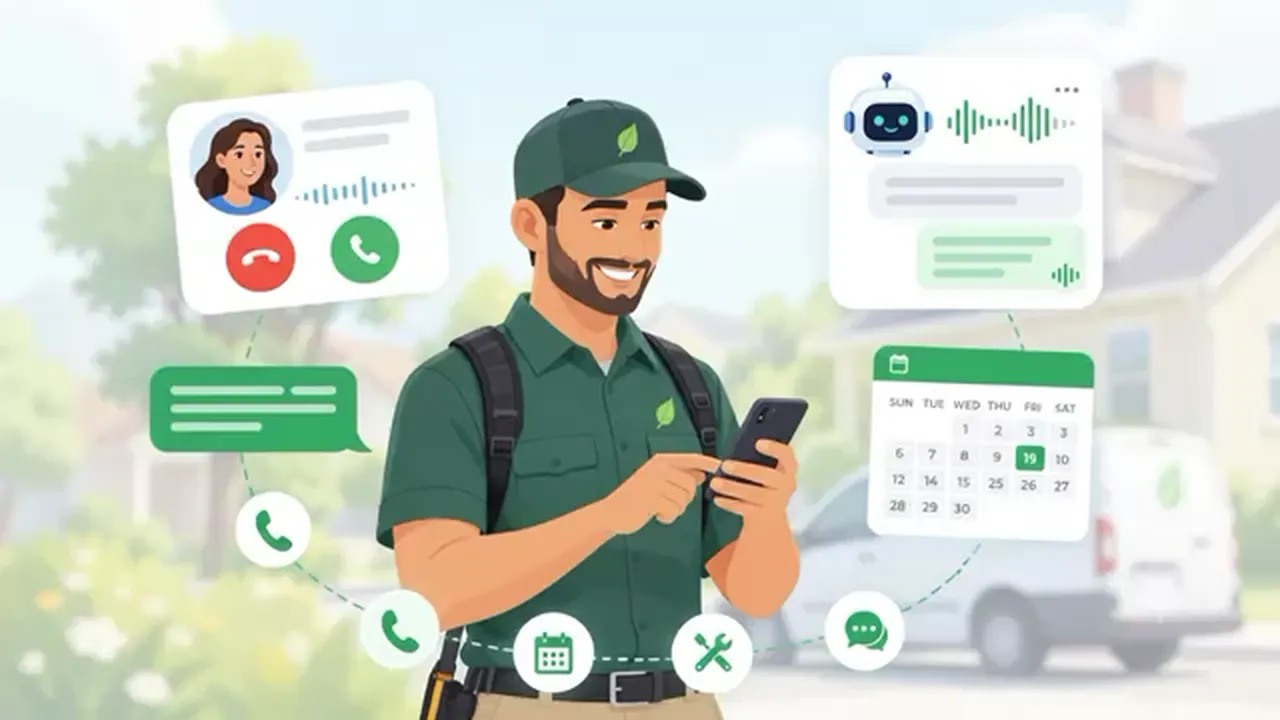
When a call goes unanswered, the caller gets a text from your business number within seconds, asking what pest they are dealing with and offering a booking link. Many homeowners would rather text than leave a voicemail, so the conversation keeps going and the job still gets booked.
Yes, within ranges you approve. It can quote a range for general pest, ants or mosquito plans, and book an inspection for termites, wildlife or bed bugs, where the price depends on what the tech finds.
You decide. The receptionist can transfer urgent calls, such as stinging insects by a doorway, to your on-call tech, book the first slot in the morning, or take a detailed message and text it to you straight away.
We connect to the software you already use wherever it offers an API or a supported integration. Where a tool is closed, bookings reach your team by calendar invite, text or email. We check your exact setup on the first call, before we quote.
Two to four weeks for most pest control companies. We map your call flow, load your services and price ranges, run test calls with you, then forward your line when you are happy with it.
Yes, when it is done properly. We register your number for business texting (A2P 10DLC in the US), only text people who contacted you or agreed to messages, and include an opt-out in every thread.
Yes. Your website, booking system, CRM and automations are built for you and owned by you, with no per-seat fees. The AI receptionist runs on a monthly plan because it covers phone minutes and the voice service.
No. The store shows our prices so you can plan, and booking a stack review is free. On the call we confirm the scope and give you a fixed price in writing before anything is built.
Online booking and CRM builds depend on your software, service area and workflow, so we price them after the free call. You still get a fixed price, never an hourly meter.
How pest control companies grow in 2026: answer first, book faster, keep every customer
By the OWNIT teamUpdated 9 min read
Most pest control companies don't have a lead problem. They have an answering problem, a follow-up problem and a renewal problem. This guide covers the systems that fix all three, in the order that pays back fastest.
Why pest control is won on the phone
Pest problems are urgent and personal. Someone who just found droppings in the pantry or a wasp nest over the front door wants it handled today, not next week. They search, scan the map results and call the first company that looks trustworthy. If nobody answers, very few leave a voicemail. They call the next listing.
That makes speed to answer the biggest lever most pest control companies are not pulling. The company that picks up and offers a time usually gets the job, and often the recurring plan that follows it. A missed call is rarely one lost treatment. It is the first service, the quarterly plan, the referrals and the reviews that would have come after it.
Calls go unanswered at predictable moments: after 5 PM, at weekends, over lunch, while the office manager is on another line, and on the first warm days of swarm season, when half the town calls at once.
What missed-call recovery means
Missed-call recovery is not one tool. It is three layers that work together, so no caller hits a dead end.
Answer more calls live
Route calls to the right person first: the office, then the on-call tech, then overflow. A clear call flow saves a surprising number of jobs before any AI is involved.
Let an AI receptionist answer the rest
An AI receptionist picks up every call that would otherwise ring out. It asks what pest the homeowner is seeing, where the property is and how urgent it is, checks your schedule and books the visit. Urgent calls, unhappy customers and anything it is unsure about go to a person.
Text back anything that still slips
When a call is missed anyway, an automatic text goes out within seconds: sorry we missed you, what are you dealing with, here is a link to book. Many homeowners would rather text than leave a voicemail, so the conversation keeps going instead of moving to a competitor.
Once this is running, track three numbers: the share of calls answered, the share of answered calls that book, and the time from first contact to a confirmed appointment.
Voicemail, answering service or AI receptionist
How the three ways of covering your phone compare for a pest control company
Feature
Voicemail
Answering service
AI receptionist
Answers after hours
No
Yes
Yes
Books into your schedule
No
Usually takes a message
Yes, in real time
Knows your services and price ranges
No
Follows a script
Trained on your own knowledge base
Handles a rush of calls
No
Callers may wait in a queue
Many calls at once
How it is priced
Free
Per minute or per call
Setup plus a monthly plan
Answering services are good at taking messages. Where they fall short for pest control is booking: a message that waits until morning belongs to a homeowner who has already called someone else.
Make it easy to book without calling
Plenty of homeowners would rather book online, especially in the evening. Give them a way to do it from every page of your site.
Let them pick the pest and the property type, and check their ZIP code against your service area.
Show price ranges for common services such as general pest, ants and mosquito treatments, with a clear note that the final price follows the inspection.
For termites, wildlife and bed bugs, book an inspection instead of quoting a price.
Offer real time windows from your schedule, then confirm by text and email straight away.
Price ranges feel risky to a lot of owners. In practice they filter out people who were never going to buy and give everyone else the confidence to book.
Turn one-time treatments into recurring plans
The steady money in pest control is in recurring service: quarterly general pest plans, monthly mosquito service in season and annual termite renewals. Recurring customers also make routes denser, so every tech hour earns more.
Offer the plan at three moments:
When they book. Show the plan price next to the one-time price.
After the first treatment. Suggest the next visit while the result is fresh.
Before the season turns. Remind past one-time customers before ants, mosquitoes or rodents arrive.
Then let automation carry the plan: a reminder before each visit, an on-the-way text, a short note after the service and a renewal that doesn't depend on anyone remembering to send it.
Win the map pack with local SEO
Most pest control searches are local and urgent, so the map results matter more than almost anything else. A few basics move the needle:
Google Business Profile. The right primary category, your real service areas, every service you offer, photos of your actual techs and trucks, and seasonal posts.
Pest and city pages. One page for each pest and each town you serve, each with genuinely useful local detail, not the same text with the city name swapped.
Reviews. A steady flow of recent reviews, with a reply to every one.
Speed and structure. A fast, mobile-first site with LocalBusiness structured data, click-to-call on every page and online booking.
If you run Google Local Services Ads, answering matters there too: Google lists responsiveness to customer enquiries among the factors behind how those ads rank. One more reason an unanswered phone costs more than one job.
Get more reviews, within Google's rules
Ask every customer the same day, by text, and name the tech who did the work. Don't choose who gets asked based on whether they seem happy. Google's policies don't allow review gating, where only satisfied customers are invited to post.
You can still hear about problems first. Ask for a quick rating, follow up personally on anything low, and make sure every customer can still leave a public review if they want to.
Plan for the seasons
Demand follows the weather, and the details vary by region. A typical year across much of the US looks like this:
Spring. Termite swarmers and ants. Contact past customers before the first warm week, and make sure every call gets answered when the phones spike.
Summer. Mosquitoes, wasps and fleas. Sell monthly mosquito service and same-week stinging insect visits.
Fall. Rodents move indoors. Offer exclusion work and inspections.
Winter. Renewals, annual inspections and win-backs for lapsed customers.
The aim is to fill the quiet months from your own customer list instead of paying for every lead.
Run the route, not the paperwork
Growth stalls when the back office runs on paper tickets and text threads. A CRM built around how you work keeps one record per customer and property: pest history, notes about pets and gate codes, photos, products applied and every message. It gives each tech a route for the day and keeps application records with the job, which many states require licensed applicators to keep.
Text customers the right way
If you text customers from a business number in the US, register it for A2P 10DLC through your messaging provider. Only text people who contacted you or agreed to messages, keep the content about their service, and include a way to opt out in every thread. It protects your number and keeps your texts landing.
A 30-day plan
Week one. Call your own number after 5 PM and on a Saturday. Count missed calls for a week and review your Google Business Profile.
Week two. Set up call routing, missed-call text-back and an AI receptionist for after-hours and overflow calls.
Week three. Add online booking with price ranges, and start asking every customer for a review.
Week four. Launch your recurring plan offer and a campaign to past customers for the coming season.
What to measure
Answer rateCalls answered by a person or the AI, out of all calls.
Booked rateAnswered calls that end in a booked visit.
Speed to leadTime from first contact to a confirmed appointment.
Plan conversionNew customers who join a recurring plan.
Review flowNew Google reviews each month.
Cost per booked jobMarketing spend divided by booked visits.
From the OWNIT Journal
Plain-English guides from the OWNIT team: what things cost, what to own and what to skip.
Voicemail, a human answering service and an AI receptionist compared on the measure that pays the bills: whether the caller hangs up with an appointment.
A line-by-line reading of a small-business website quote: the one-time work, the running costs most proposals leave out, and the questions that show whether a price is fair.
8 min read
Answer every pest call first.
Book a free 30-minute call. We map how calls, bookings and follow-ups reach you today, show where jobs slip, and quote a fixed price to fix it.